- May Every Life Have Peace
- 929.348.4884
- 929.348.4885
- intake@stxavierhcs.com

Token Approvals, Transaction Simulation, and the Real Mechanics of DeFi Security
Ozwin Casino Seasonal Promotions: Campaign Dates and Participation Conditions
March 22, 2026Polymarket event trading: what prediction markets actually do (and what they don’t)
March 23, 2026A common misconception is that a crypto wallet protects users simply by keeping private keys out of sight. Private-key protection matters, but it is only the first layer. In decentralized finance, many losses occur after a user authorizes a perfectly valid transaction whose consequences were misunderstood: a token approval remains active, a swap interacts with an unexpected contract, or a seemingly ordinary signature grants more authority than intended.
The more useful mental model is not “the wallet blocks every bad transaction.” It is “the wallet helps the user inspect what authority a transaction will exercise.” That distinction places token approval management and transaction simulation at the center of practical DeFi security. For US users moving between decentralized exchanges, lending markets, bridges, and NFT applications, the question is not merely whether a transaction will succeed. It is what the transaction permits, which contracts it trusts, and what remains possible afterward.
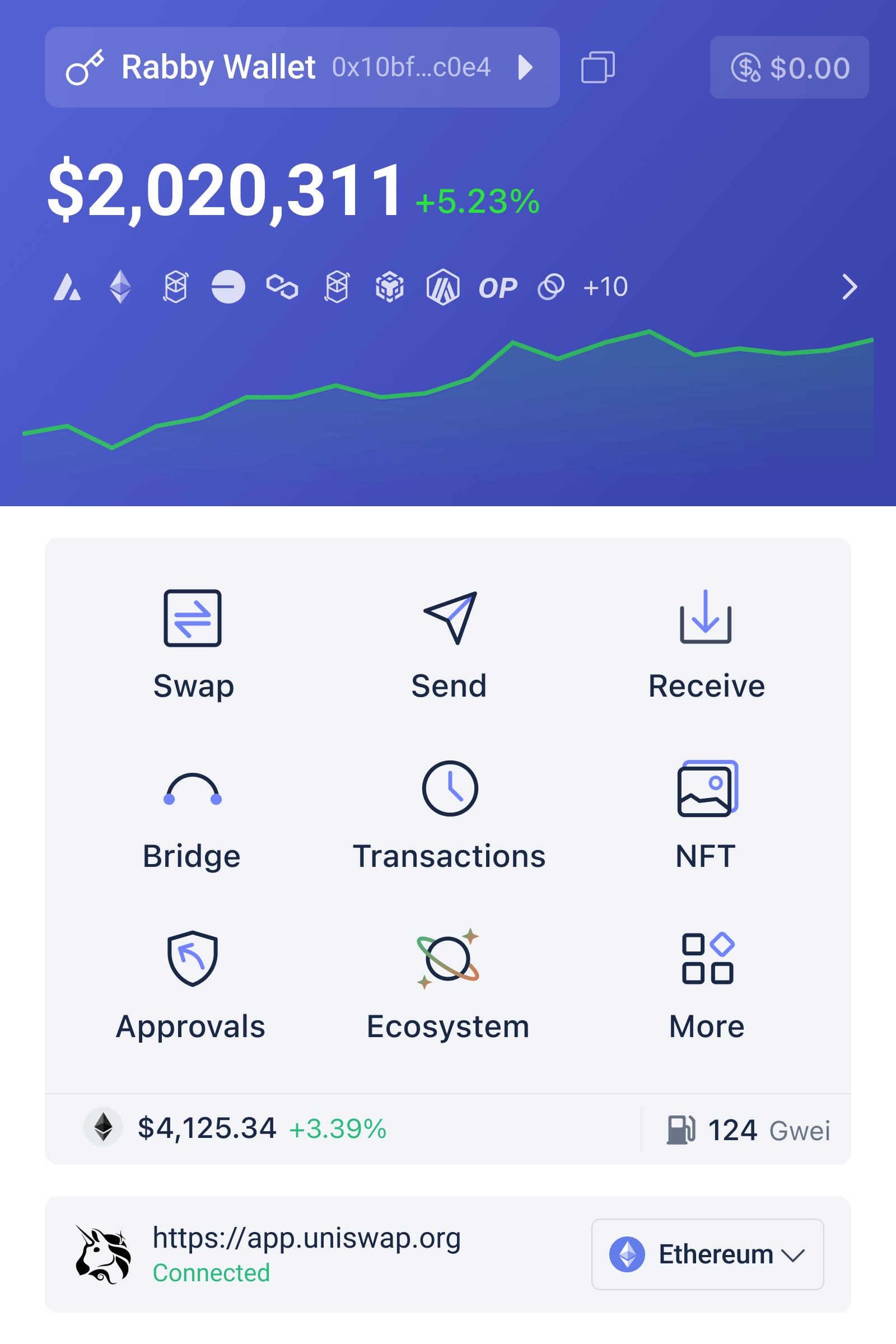
Why a successful transaction can still be dangerous
On an Ethereum-compatible network, an ERC-20 token is controlled by a smart contract. When a user wants another contract, such as a decentralized exchange, to spend those tokens, the user typically calls approve. The token contract records an allowance: a specified amount that the approved spender may transfer later through transferFrom.
This creates an important separation between two events. The approval transaction does not necessarily move tokens immediately. Instead, it creates permission for a spender to move them in the future. A later swap, deposit, or other interaction may use that permission. If the allowance is very large, the permission may remain useful to the spender long after the original action is complete.
That is why a transaction can be technically valid and still be unsafe in context. The blockchain may correctly execute the call, the wallet may correctly sign it, and the token contract may correctly update its allowance. None of those facts prove that the user intended to grant that level of access.
A further complication is that “unlimited approval” is often convenient. It avoids asking for a new approval every time a user trades or deposits. The trade-off is persistent authority. If the approved contract is compromised, upgradeable in an unexpected way, or simply not the contract the user thought it was, a broad allowance can increase the potential loss. The risk depends on the token balance, the spender, the contract’s design, and whether the allowance is later revoked or reduced.
Approval management is an authority problem, not merely a cleanup task
Users often treat approval revocation as routine housekeeping. It is better understood as access-control management. An allowance answers three questions: which token may be spent, which contract may spend it, and how much may be spent. Good security practice therefore asks whether each permission is still necessary and proportionate to the intended activity.
Reducing an allowance can narrow future exposure, but it does not erase history from the blockchain. A revocation is itself a transaction and requires network fees. On some networks, token contracts also have implementation quirks around changing allowances, so users should read the wallet’s interpretation rather than assume every approval behaves identically.
Revocation also has boundaries. It cannot recover tokens already transferred, undo a malicious signature that has already been used, or make a fraudulent website trustworthy. It is a forward-looking control: it changes what a spender may do after the change is confirmed. That makes timing important. If a user suspects a compromised contract, reducing or revoking allowances should be considered promptly, while recognizing that the wallet and network cannot guarantee recovery.
For a user installing a browser wallet, the practical lesson is to distinguish three activities: receiving assets, signing a message, and sending a transaction. A message signature may not move tokens directly, but some signature formats can authorize actions that are later submitted on-chain. A transaction can include multiple calls, and an approval can establish permissions that persist beyond the visible swap. The interface should help expose these differences instead of presenting every request as a generic “confirm” button.
What transaction simulation can and cannot reveal
Transaction simulation attempts to execute a proposed transaction in a controlled environment before it is broadcast. The wallet or supporting service examines the expected state changes: tokens leaving the account, tokens arriving, contract permissions being modified, and sometimes warnings associated with the destination or method being called.
This is more informative than displaying only a raw function name or hexadecimal data. A user may understand “swap USDC for ETH” more readily than a contract method with encoded parameters. Simulation translates the proposed call into an outcome-oriented view. It can answer questions such as: Will the transaction revert? Which assets appear to move? Is an approval being created? Does the result differ materially from what the user expected?
But simulation is not a crystal ball. It depends on the state used for the simulation, the accuracy of contract decoding, the behavior of external contracts, and the assumption that the transaction will be executed under comparable conditions. Blockchain state can change between simulation and inclusion. Prices, liquidity, oracle values, block timestamps, and contract storage may move. A malicious application may also present one environment during review and behave differently under conditions the simulator does not model.
There is a deeper limitation: simulation describes execution, not legitimacy. If a user intends to exchange one asset for another through an authentic protocol, a simulation can help verify the expected asset flows. It cannot independently prove that the protocol’s economic terms are fair, that the token is genuine, that the user is not overpaying for a thinly traded asset, or that an upgradeable contract will remain trustworthy. Security review therefore requires both mechanical inspection and judgment about the application.
How to read a wallet warning without outsourcing judgment
Warnings are most useful when treated as prompts for investigation rather than automatic verdicts. A warning about an unknown contract may reflect a new but legitimate deployment, or it may indicate a phishing destination. A warning about unlimited approval may be expected for a familiar workflow, but it still identifies a real permission boundary. Conversely, the absence of a warning is not proof that an action is safe.
A disciplined review can follow the path of authority:
- Identify the network and confirm that it is the network intended for the activity.
- Check the destination contract and compare it with the application’s expected contract information.
- Separate approvals from transfers, swaps, deposits, withdrawals, and signatures.
- Inspect the token and amount entering or leaving the wallet.
- Ask whether the resulting allowance will remain after the transaction is complete.
- Consider whether the action is reversible and whether the wallet holds more funds than the application needs.
For readers who want to set up a wallet interface that emphasizes these checks, the rabby extension download can be approached as a security workflow rather than a simple installation step. Before installing any browser extension, users should verify that they are using an authentic source, review the permissions requested by the extension, and protect the recovery phrase offline. A transaction-simulation feature is valuable only if the surrounding wallet setup is also handled carefully.
The central trade-off: convenience versus bounded permission
DeFi interfaces are designed for composability. A user may approve a token once, use it across several transactions, and move between protocols without repeated interruptions. That convenience supports efficient on-chain activity. Yet the same composability means permissions can outlive the narrow purpose that created them.
A safer operating pattern is to match permission scope to exposure. A user might approve only the amount needed for a particular action, use a separate wallet for experimental applications, and keep long-term holdings away from routine trading activity. This does not eliminate smart-contract risk, but it limits the consequences if one interaction goes wrong. The trade-off is additional transactions, network fees, and operational complexity.
Separate wallets are not a substitute for careful review. They can reduce blast radius, but users may still sign a harmful transaction from the wrong account or move funds into a compromised address. Hardware wallets can protect private-key use while still allowing the owner to authorize a bad contract interaction. Security tools reduce particular failure modes; they do not replace situational awareness.
What to watch as wallet security develops
The direction of travel is likely to favor richer intent descriptions: not just which contract is called, but what the user expects to receive, spend, approve, or authorize. If these systems become more reliable, the practical benefit could be substantial because many users struggle with contract-level data rather than cryptography itself.
The unresolved issue is trust in the interpretation layer. A wallet may depend on external data, contract labels, simulation services, and decoding logic. Users should therefore watch how clearly a tool distinguishes confirmed facts from estimates. A displayed token outcome may be simulated; a contract reputation label may be incomplete; and a warning may reflect uncertainty rather than a demonstrated exploit.
The most robust approach is layered. Use a wallet that makes transactions legible, review approvals as continuing permissions, simulate where available, limit balances exposed to unfamiliar applications, and treat unexpected signatures as a reason to stop. In conditional terms, if wallet interfaces continue improving their explanations without encouraging blind reliance on warnings, they may shift DeFi security from opaque confirmation toward informed authorization. That would not make decentralized finance risk-free. It would make the user’s actual decision more visible.
Frequently Asked Questions
Does revoking a token approval return lost funds?
No. Revocation changes future spending permission after the revocation transaction is confirmed. It cannot reverse transfers that already occurred, recover assets sent to a wrong address, or undo a transaction that has settled on-chain.
Is an unlimited approval always malicious?
No. Unlimited approvals can be used by legitimate applications to reduce repeated approval transactions. They nevertheless create broader and potentially longer-lasting permission, so users should decide whether the convenience is worth the additional exposure and revoke or reduce unused approvals when appropriate.
Can transaction simulation guarantee that a DeFi transaction is safe?
No. Simulation can reveal expected execution, asset movements, permissions, and possible reverts, but it depends on the modeled state and available decoding. It cannot guarantee that a contract is legitimate, that market terms are favorable, or that later state changes will match the preview.
