- May Every Life Have Peace
- 929.348.4884
- 929.348.4885
- intake@stxavierhcs.com

Rabby Wallet: Why Transaction Simulation Changes the Game — and What It Doesn’t Fix
Apuestas 100 Seguras
June 17, 2025Regole Scommesse Calcio Sisal
June 18, 2025Surprising claim to start: simply knowing the exact token balance changes a DeFi transaction will produce before you sign it meaningfully reduces the most common form of smart‑contract theft — blind signing — but it does not, by itself, eliminate systemic risk. That distinction matters for U.S. DeFi power users deciding whether to install a new wallet or to add Rabby to an institutional workflow.
This piece unpacks how Rabby Wallet works, why its transaction simulation and pre‑transaction risk scanning are practically different from the status quo, and where those defenses stop. I’ll correct common misconceptions, compare Rabby’s trade‑offs with mainstream alternatives, and finish with concrete heuristics for deciding when to install, when to pair Rabby with a hardware or multi‑sig guardrail, and what to watch next in the wallet stack.
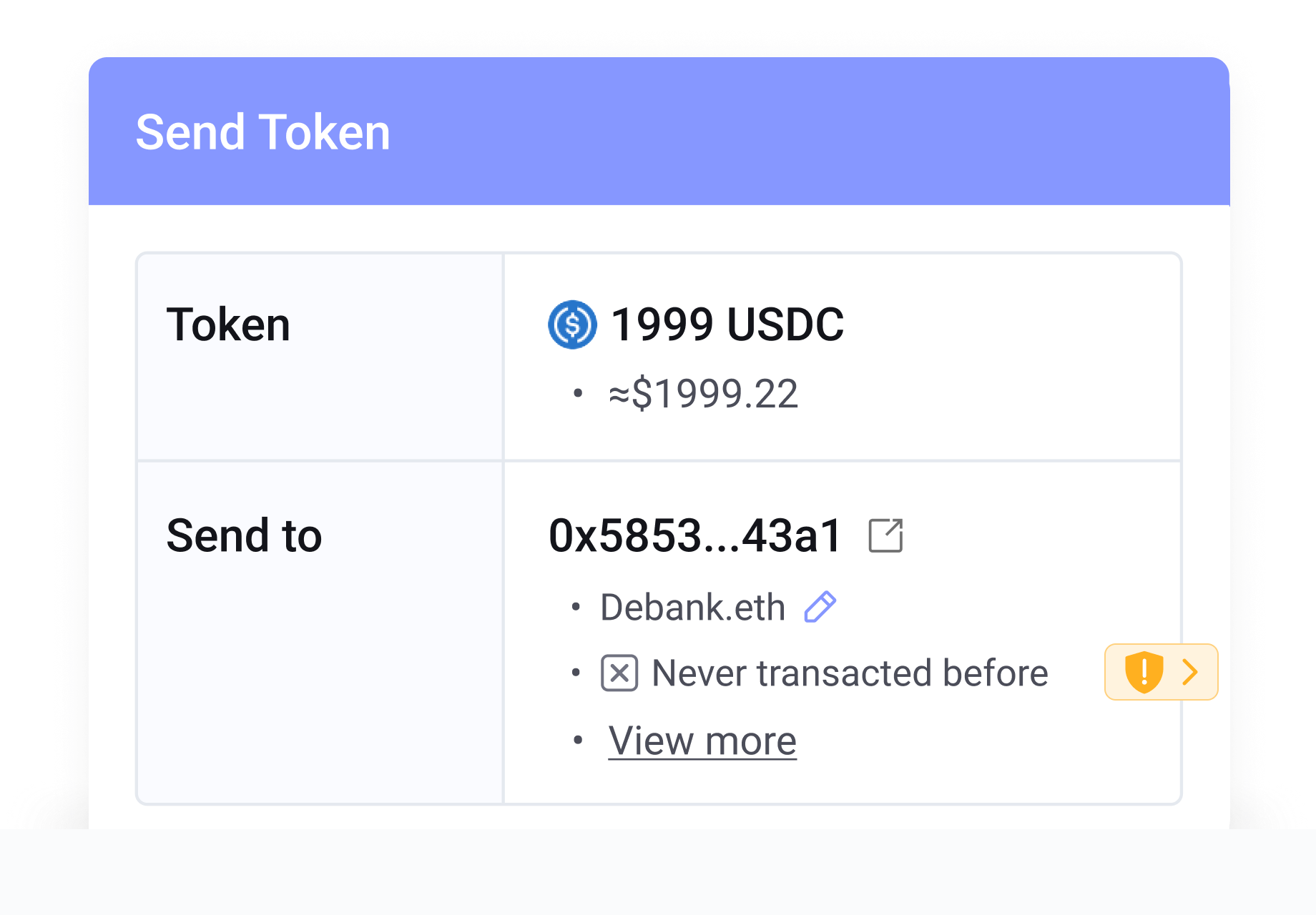
Mechanics first: how Rabby changes the signing moment
Most EVM wallets hand you a transaction blob and ask you to sign. The blob is opaque: you must trust the dApp UI, your own mental model of the contract, or an external scanner. Rabby inserts two mechanical steps at the point of signing. First, it simulates the transaction locally and displays the exact estimated token balance changes and fee costs. Second, a security engine scans for red flags — prior hacks, suspicious approval requests, non‑existent recipient addresses — and surfaces them as warnings.
Why that matters: simulation converts the problem from “trust the message” to “inspect a readable outcome.” In practice this reduces blind signing attacks where malicious contracts hide token drains behind innocuous UI flows. It also reduces careless approvals: if you see that an approval will permit a contract to move 100% of your holdings, you can revoke or limit it before confirming.
Reality check: what simulation and scanning do not do
Simulation is powerful but bounded. It relies on accurate modeling of on‑chain state and the contract’s behavior in the simulated environment. Complex contracts with oracle dependencies, off‑chain calls, or time‑sensitive logic may behave differently at execution. In other words: simulation predicts behavior under current conditions, not under every adversarial scenario. Also, a simulation cannot protect against user error — signing the wrong transaction by mistake — or against vulnerabilities in the underlying smart contract that are not detectable by signature analysis.
Rabby’s security engine reduces risk of interacting with previously exploited contracts, but it cannot retroactively immunize you from zero‑day vulnerabilities in widely used protocols. The wallet is open‑source under an MIT license, which improves auditability and community scrutiny, but open code is not the same as formal verification or a guarantee of bug‑free operation.
Comparisons and trade-offs: Rabby vs MetaMask, Trust, and others
Quick comparative frame: MetaMask, Trust Wallet, and Coinbase Wallet are well‑known incumbents with large user bases. The main difference here is feature focus. Rabby prioritizes transaction transparency (simulation) and safety ergonomics (approval revoke, pre‑transaction scanning, automatic network switching). For a DeFi power user, those distinctions change daily workflow: fewer surprises when executing complex swaps, cross‑chain gas top‑ups to ensure transactions on layer‑2s don’t fail for lack of native gas, and a “Flip” feature to replace or coexist with MetaMask.
Trade‑offs: Rabby currently lacks a built‑in fiat on‑ramp and native in‑wallet staking. If your use case is on‑ramping retail users or simple buy‑and‑stake flows, an incumbent wallet integrated with a custody or fiat partner may be more convenient. For active traders and DeFi operators, Rabby’s simulation, approval revocation, and hardware‑wallet integrations (Ledger, Trezor, Keystone, and others) are more relevant.
Installation and platform choices — practical steps and when to prefer which client
Rabby is available as a Chromium extension (Chrome, Brave, Edge), mobile app (iOS, Android), and desktop client (Windows, macOS). For US‑based power users and institutional teams, best practice is layered: use a hardware wallet for signing high‑value transactions, connect it to Rabby for day‑to‑day DeFi interactions, and route treasury or co‑managed funds through a multi‑sig solution such as Gnosis Safe. Rabby also integrates with enterprise custody providers like Fireblocks and Amber for workflows that require custodial custody or policy controls.
To try it, download the appropriate client and import an existing seed or create a fresh account. If you maintain MetaMask alongside Rabby, use the Flip toggle to test default wallet behavior without breaking your existing setup. For organizations, prioritize connecting Rabby to your multi‑sig or custodial solution in a test environment first.
Security history and what it implies for risk management
Factually, a 2022 incident associated with Rabby Swap resulted in approximately $190,000 lost. The response — freezing the contract, compensating users, and tightening audits — illustrates a sensible incident response pattern but also underscores a larger point: no wallet feature eliminates protocol risk. Wallets can reduce user‑level attack vectors (blind signing, careless approvals) but cannot make an insecure smart contract secure. Treat wallets as part of a defense‑in‑depth strategy, not a single line of defense.
Heuristic: consider three concentric layers — (1) signing hygiene and wallet features (simulation + revoke), (2) hardware and multi‑sig for custody and high‑value operations, and (3) protocol due diligence and monitoring. Rabby strengthens layer 1 considerably; layers 2 and 3 still require organizational controls and external audits.
Decision framework: should a US DeFi power user install Rabby?
Use this decision heuristic: if you regularly interact with composable DeFi protocols, perform complex swaps, or manage many token approvals across chains, Rabby’s pre‑sign simulation and native revoke tool materially lower operational risk and cognitive load. If your priority is fiat onboarding or in‑wallet staking for retail users, Rabby’s lack of a fiat on‑ramp and no native staking may be limiting.
For institutional users, Rabby is most useful when paired with hardware wallets or multi‑sig custody: it improves the safety of the human/operator decisions while leaving cryptographic custody to proven devices or services. Where speed is essential, note that automatic network switching reduces friction but introduces a small surface area for UI or RPC misconfiguration; validate networks before signing large transactions.
What to watch next
Signals worth monitoring: expansion of built‑in fiat integrations (would change onboarding dynamics), deeper native staking or liquid‑staking support (would alter custody trade‑offs), and formal third‑party verification of the simulation engine (would increase confidence). Also watch adoption among enterprise custody providers: tighter enterprise integrations change where Rabby sits in a treasury stack.
In practical terms, track three metrics for your own behavior: frequency of approvals you revoke, incidence of simulation warnings you heed (and what you then do), and how often cross‑chain gas top‑ups prevent failed transactions. These behavioral metrics—easy to collect personally—are better indicators of whether Rabby is delivering value in your workflow than headline feature lists.
FAQ
Q: Is Rabby safer than MetaMask?
A: “Safer” depends on threat model. Rabby reduces user‑level risks like blind signing and unmanaged approvals by simulating transactions and offering an approval revocation tool. MetaMask has broader market penetration and some ecosystem conveniences. For active DeFi users concerned about signing transparency, Rabby offers stronger ergonomics; for basic on‑ramp and retail flows, MetaMask and custodial options may be more convenient.
Q: Can Rabby prevent smart contract exploits?
A: No. Rabby helps prevent user mistakes and flag interactions with historically compromised contracts, but it cannot fix vulnerabilities in a third‑party smart contract or prevent zero‑day exploits. Use Rabby as part of a broader risk management stack: audits, multi‑sig custody, hardware wallets, and ongoing monitoring.
Q: How do I download and install Rabby?
A: Rabby is distributed across browser extensions, mobile apps, and desktop clients. For a straightforward start, install the Chromium extension and import or create a wallet. If you want to learn more about download options and specific installers, visit this resource: rabby.
Q: Should institutions use Rabby alone?
A: Institutions should not rely on a single client. Rabby is useful for improving operator safety but should be combined with hardware wallets, multi‑sig, and enterprise custody (Gnosis Safe, Fireblocks, Amber) depending on the custody policy. Think of Rabby as enhancing human decision quality, not as replacing cryptographic custody controls.
Final practical takeaway: Rabby’s transaction simulation and risk scanning change the user’s mental model at the decisive moment — they turn opaque blobs into inspectable outcomes. That matters. But those features are one important tool among many. If you manage significant DeFi assets in the U.S., treat installation of Rabby as a conditional upgrade: combine it with hardware or multi‑sig, monitor its signals, and keep protocol‑level caution as your default stance.
